
Branislav Božović is a geological engineer specializing in engineering geology and hydrogeology. From 1971 to 2000, he worked at the Geological Research Institute of Serbia (Geozavod), where he gained extensive experience in geological research.
From 2000 to 2008, he served as Secretary of the Secretariat for Environmental Protection of the City of Belgrade, and from 2008 to 2010, as Head of the Environmental Quality Monitoring Department.
A significant part of his career was dedicated to eco-geological research, or environmental geology. He is the author and co-author of numerous engineering and eco-geological projects, particularly in the field of geological research.
As a member of the national team of the Ministry of Natural Resources and Environmental Protection, he participated in drafting the new environmental protection system law from 2001 to 2003.
He is a lecturer at numerous seminars in the field of environmental protection, with a special focus on geological conditions and the importance of geodiversity and geoheritage.
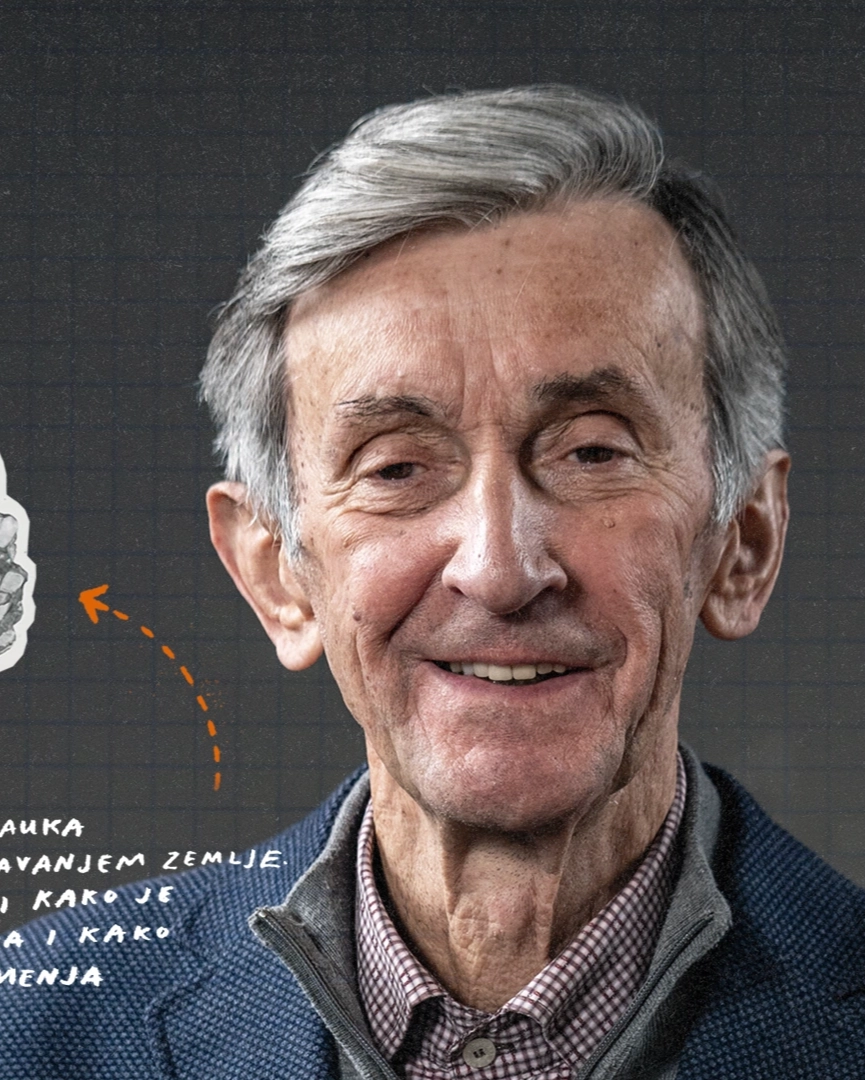
In the latest episode of the documentary series “Lithium: Experts Speak,” geologist Branislav Božović openly discusses the state of Serbia’s mining sector, the environmental consequences of raw material exploitation, and the role of foreign companies in projects like “Jadar.” Božović warns that Serbia is at a crossroads—between short-term profit and the long-term preservation of natural resources and public health.
I don’t know for certain, but it’s very likely—primarily in poorer countries that can’t defend themselves from large investors.
From the perspective of geology—which deals with soil, structures, and formations—I don’t think it’s possible. It simply cannot be achieved.
Absolutely. That is our duty, our mission as humanity.
No company can guarantee that—especially not with the resources found in Jadar or any other mining deposits.
No. Mining is a very important economic sector. The issue is how it is conducted.
I don’t want to be too harsh, but I must be truthful and clear—the state of mining in Serbia is not good. We’ve rushed into things, and much has been neglected. This is especially visible in our still-active mines, which have failed to fulfill obligations related to environmental restoration during and after exploitation—especially during the transition to new exploration or excavation fields. Restoration should include various measures, primarily biotechnical, but also engineering solutions, to prevent further degradation of soil, water, and air.
Yes, certainly. Let me first point out something unfortunate—the term sustainable only gained prominence in the last few decades, especially after the famous Earth Summit in Rio de Janeiro in the 1990s. Sustainability was always meant to refer to development that is balanced—economically, energetically, and environmentally. But now, the term is often mocked by those who promote uncontrolled growth.
I emphasize, as do many of my colleagues, that sustainable mining means a harmonized approach in exploration, exploitation, and adherence to environmental standards. It’s not just about extracting value from the ground while leaving destruction behind. This approach is not only necessary—it’s possible.
Because the consequences are right before our eyes. Just as reckless urban development has destroyed cities through overbuilding, we now see rampant mining doing the same to nature. This has been exacerbated by powerful corporations—some of which are not merely companies, but consortiums supported by entire nations. They sign contracts for 30-40 years of projected use but extract all the value much earlier using aggressive technologies.
Mass extraction causes massive disruptions—to the soil, air, water, plant and animal life. Many of the consequences aren’t immediately visible. People assume we’ll cope with it, install filters—but that’s thinking on a human lifetime scale. The real impact will be felt by future generations. That is catastrophic.
Such a plan is deadly—both in the human time frame and beyond. The harmful materials, dust, heavy metals—they remain in the soil, air, and water. Future generations will suffer.
Take a trip to Bor or Majdanpek, and you’ll see how people live there now. It’s neglected, degraded, and even simple environmental mitigation measures were not applied. Once a site is devastated, it can’t be restored. Rivers and entire ecosystems are affected.
We now have two major mining hotspots in Serbia—gold mining in Homolje, and the proposed jadarite mining in western Serbia. Even before full operations begin, we’re already seeing pollution—especially of water and air.
In Eastern Serbia, some of our most valuable underground water reserves—springs we used to admire as tourist destinations—are under threat. Entire mountains like Starica above Majdanpek, once a symbol and natural protector of the town, have been destroyed. The gold ore isn't even processed here—it’s shipped abroad, to China or Saudi Arabia. The same is expected for lithium from Austria.
Let me be clear—foreign involvement is not inherently wrong. Concessions can be a good model—if the contracts are fair and include reasonable terms regarding extraction methods, quantities, and environmental conditions.
The real problem is that the regulatory bodies meant to oversee these operations—mining and geological inspections—have been weakened. Inspection services are often the first to be cut in local governments, which is a huge mistake.
So we end up in a situation where there’s little or no control. I would argue that we don’t even know how much our Chinese partners have extracted or how much gold they’ve taken. The same will happen with lithium.
Absolutely. That’s part of the problem—lack of coordination and monitoring. Sustainable mining requires such coordination: how much is extracted, where it is stored, how it is stored, what profits are generated and shared. Today, much of that is treated as a state secret, which is unacceptable.
We used to protect strategic resources like a grandfather protects an orchard for his great-grandchildren. But now, these reserves are being emptied during just one or two political mandates.
There are categories of raw materials—certain metals and waters—that should not be so easily sold. I was trained with that mindset, and I still believe in it.
Exactly. It’s like our folk saying goes: “Only the one who poured the honey licked their fingers.” It may not sound scientific, but it’s true—we’re too eager to sell off what we have without thinking of the future.
Generally, when you speak about natural resources in Serbia, you have to include all resources, all goods—not just metallic raw materials, mining and geological resources—because everything is interconnected. Air is a resource, water is a resource, forests are resources, wild animals are resources, and all those natural values and rarities make up the overall value of a territory and a nation.
What is guaranteed by the Constitution, what is written into exceptional environmental protection laws, and into all relevant sectoral laws in our country—this, above all, is not respected, and in fact is drastically violated. This is obvious, clearly visible in many examples, where someone—even a foreigner—can enter your country and engage in drilling and exploration without holding the official permits. That’s absurd.
So how can we then expect responsible use of those goods—I prefer to say “use” rather than “exploitation,” because exploitation is an ugly capitalist word. Is that use sustainable, is it monitored, can it even be controlled? Are there periodic assessments of the condition of these resources? The answer is: no. We don’t even monitor that. We have a major deficit. We’ve abandoned the concept that every well-run household, let alone a state, must uphold. And in our case, this is made even more difficult—and unfortunately, the situation is very poor.
What matters more than lithium, more than jadarite or borates or any of that, is the overall value. When the topic of nickel came up, I asked those advocating for immediate nickel extraction in Mokra Gora whether they had assessed the total value of Šumadija? It’s not just about the market value of jadarite, as if that alone makes us millionaires. Have they calculated the overall value—economic, social, spiritual, cultural—for today and future generations, of Cer, Pocerina, Rađevina, and the large Jadar valley, where people have lived for centuries and where thousands live today?
Has anyone truly evaluated that? Because it’s guaranteed that this total value is much greater than the current market value of lithium, even if it were extracted and sold immediately, and the money spent on whatever is considered “urgent” today. But what about the future?
For the very reasons I’ve explained. It’s precisely because these operations are being moved to poorer countries with weaker regulations, or where existing laws can be bypassed to allow fast-track exploitation. And another fact is that our jadarite also contains borates—boron minerals—so that’s an added value. They sign contracts for lithium but will also use the borates. These are all calculations, and the contracts are secret—even for professionals in the field.
Experts from our universities and the Academy of Sciences have asked to see these contracts—even offering to sign confidentiality agreements—just to understand what has been agreed upon and what the project entails. But even the technologies involved aren’t known.
Across Europe and globally, lithium extraction technologies are still being studied, and the risks are immense. One key point: the U.S. Environmental Protection Agency issued a report a few months ago saying they’ve been investigating lithium mining risks for six years and managed to reduce the overall risk by only about 0.6%—from 100%. Everything else still carries the same risks. So serious work is being done elsewhere, and major countries in Europe don’t want to mine the way it’s done here.
In Germany, they are trying to extract lithium from mineral waters in a safer, more technologically advanced way, with continuous recycling of that water, so that it can be returned underground or reused as technical water.
Yes. And I stand by that. Don’t get me wrong, but here’s the reality: when you look at the neat, polished drawings of future tailings ponds, industrial plants, and underground mines with unseen tunnels—it’s just an image. But the moment exploitation begins—and we know this bitterly from experience—once the company leaves, the responsibility is passed on to you.
The idea that the company will monitor the site for 20 years post-closure simply doesn’t happen. There are no rich miners, nor rich mining towns.
Everyone planning major land use interventions in Serbia—especially regarding mining—must remember that Serbia is small. When I say small, I mean it’s big at heart (don’t take it the wrong way), but it is physically small, with too many polluted or at-risk areas already.
We’re talking about ecosystems here—connected through air, plants, animals, groundwater, and geology. All these ecosystems are interlinked.
In the early years, Rio Tinto entered through the backdoor, taking over from previous companies who had been granted access to areas opened for public-private partnerships, concessions that were, unfortunately, poorly conceived. Their scope depended on whoever was in power at the time—let me not get into that sad part.
The point is, initially Rio Tinto didn’t hold the proper permits. But once activities began, a concept of exploratory-exploitation had to be established and supervised. They formed local companies, operated here, and did so under very weak inspection oversight. Not because the inspectors were bad—but because there weren’t enough of them.
There aren’t enough inspectors to regularly visit the field and keep records. Let me give you a comparison: my colleague Đajić, a geologist working on stone projects, was involved in inspecting the collapsed canopy structure in Novi Sad. He documented everything rigorously in his reports, even though no one paid attention at the time. But thanks to him, we later understood how oversight had failed.
This is how inspection systems used to work in Yugoslavia and, until recently, in Serbia. And we must get back to that.
Now, about the current situation: if someone had monitored these sites, tracked the number of boreholes, determined whether those zones were meant for pilot studies—we’d have known. But there were numerous boreholes, with visible signs like red sludge around them, and places where corn wouldn’t grow. That shows that additives were used—substances harmful to plant life. And these are farmlands.
Jadar is a treasure. Let’s be honest: honey from the forests of Jadar and Rađevina is exported to Norway. And they have excellent honey themselves! Locals have been exporting it for decades. Just think about that: the value of a ton of honey might exceed that of a ton of lithium. Do you understand what I’m saying? Let’s not even talk about the other agricultural riches of the region.
So someone has decided that lithium is an urgent priority, and that we urgently need money, and that’s it. But this needs to be explained further—not pushed through “over the knee.”
That is the most important thing. Just like in urban planning, the architect or urbanist doesn’t work alone—it’s a team. In planning, you need everyone from geologists, botanists, and biologists to chemists, landscape architects, and physicians. The final outcome relates to health.
It’s the same in mining. Every profession relevant to the process—from geological research to resource evaluation, reserve classification (A, B, C), ore quality assessment—must be involved. This takes years.
Only after that do mining engineers step in to determine whether exploitation is even feasible, followed by economic feasibility studies. Then technologists and chemists join, analyzing chemical properties and environmental impact. Then come biologists, botanists, hydrogeologists, hydro chemists, mechanical engineers, energy experts, and finally, doctors.
This should be funded by the state, or the company should be directed to do so by the state. And experts should not be hand-picked by the company—they should be chosen via public competition, from among the best candidates, and the study should be made official. But what happened? They tried to spin that unofficial study into something “official,” even though it was not. This led to division even among faculties—Agricultural, Chemical, Mining—all of them. Some individuals worked on it secretly, their names withheld. That’s the level we’ve sunk to.
And that led to a complete division—even within the faculties—between the Faculty of Agriculture, the Faculty of Chemistry, and the Faculty of Mining and Geology. Many people worked on this secretly, so their names don’t appear—it’s being concealed. Some colleagues admitted to working on it, and that’s a good thing. But this issue caused a complete rupture among colleagues who, until recently, were united. This led to disputes in which I participated and voiced my opinion, and I believe that what was done was legally impermissible.
The part of the public that has access to information is already aware and understands the importance of this issue. But the larger portion of the public doesn’t have access—because the mainstream media doesn’t cover it—and they simply can’t grasp the significance. They can only learn something when someone comes and tells them what’s going on. That’s why organizations and individuals who were aware of the issue tried to awaken public interest. This happened in Loznica as well. There was a public discussion in Loznica. People from the village of Nedeljice protested, raised their voices, and came to the city. I was there, watching the scene: young people, citizens, sitting in cafes, watching as 30 or 40 villagers came to ask for help, to publicly say, “Don’t harm us.”
The same problem occurred at Makiš, near the water sources. We called on the citizens to show up in large numbers to make it known that building that railway route would be disastrous for Belgrade’s water supply. Only 30 or 40 people came. This shows a lack of awareness. Now, those who live there are slowly becoming aware, but many in Belgrade still think it doesn't concern them. And I say: it will come to you. That’s the problem.
The future of Serbia lies in its natural resources, including mineral raw materials. But of course, not those that pose a danger to the environment and for which even today, globally, there are no technologies to prevent, stop, or remedy the damage. That is a serious warning sign.
We’ve seen major uprisings—and even wars—in impoverished countries. Let’s not even mention the tragedy of Africa, which isn’t just about lithium, but other minerals too, including oil. Serbia, besides having mineral wealth, must explore these resources sustainably and thoroughly assess whether they endanger other, more vital environmental components—or as I prefer to call them, “environmental factors”—such as clean water, clean air, and healthy forests.
Everything connected to public health and well-being must be part of an interlinked system of sustainable development that follows the latest global discoveries and serves the public interest. When we talk about Serbia’s natural resources, we must especially highlight protected natural assets. Serbia is small, but it has dozens and even hundreds of exceptionally valuable small areas and large national parks—natural treasures that must be preserved.
Because that is the face and mirror of a nation. It reflects its culture, above all.
Naši gosti, nezavisni stručnjaci iz raznih naučnih oblasti, pružiće stručno i objektivno mišljenje o ovoj temi, koja ima dalekosežne posledice za našu prirodu, buduće generacije i zdravlje.
Naši gosti, nezavisni stručnjaci iz raznih naučnih oblasti, pružiće stručno i objektivno mišljenje o ovoj temi, koja ima dalekosežne posledice za našu prirodu, buduće generacije i zdravlje.
© Copyright 2026. All right reserved